
Places of belonging: the role of design
A sense of belonging is the feeling of being accepted and part of a community. Although belonging is a personal, internal feeling, a sense of belonging is often anchored in physical spaces: a house for a family, a place of worship for people of shared faith, a town square for a local community.
Whilst communities can form in digital places, it’s arguably in physical places, where we can see another person’s humanity up close, where we make our deepest human bonds.
Since our sense of belonging is linked to physical spaces, then architecture and design can play a role in establishing social connection. It’s perhaps most obvious at the city scale. Renowned Danish architect and urbanist, Jan Gehl, has long highlighted the role that design plays in creating successful public spaces and therefore building stronger communities.
For Gehl, idleness is an important ingredient in creating vibrant public life. The longer a person is idle, the more likely they are to participate in the world around them. Idleness can be promoted by offering numerous varied opportunities to sit. In the simple act of providing a seat, it signals to the public that they are welcome and that they belong. Seating opportunities are most successful when designed with safety and comfort in mind, and when enriched with an interesting outlook. Gehl says,
“A good city is like a good party – people stay longer than necessary because they are enjoying themselves.”
Gehl also believes in designing spaces that aren’t too prescriptive. When there’s no pressure to do or be anything, then anyone can feel accepted to stay a while. The blank canvas also provides potential for spontaneity – a powerful catalyst for social connection.
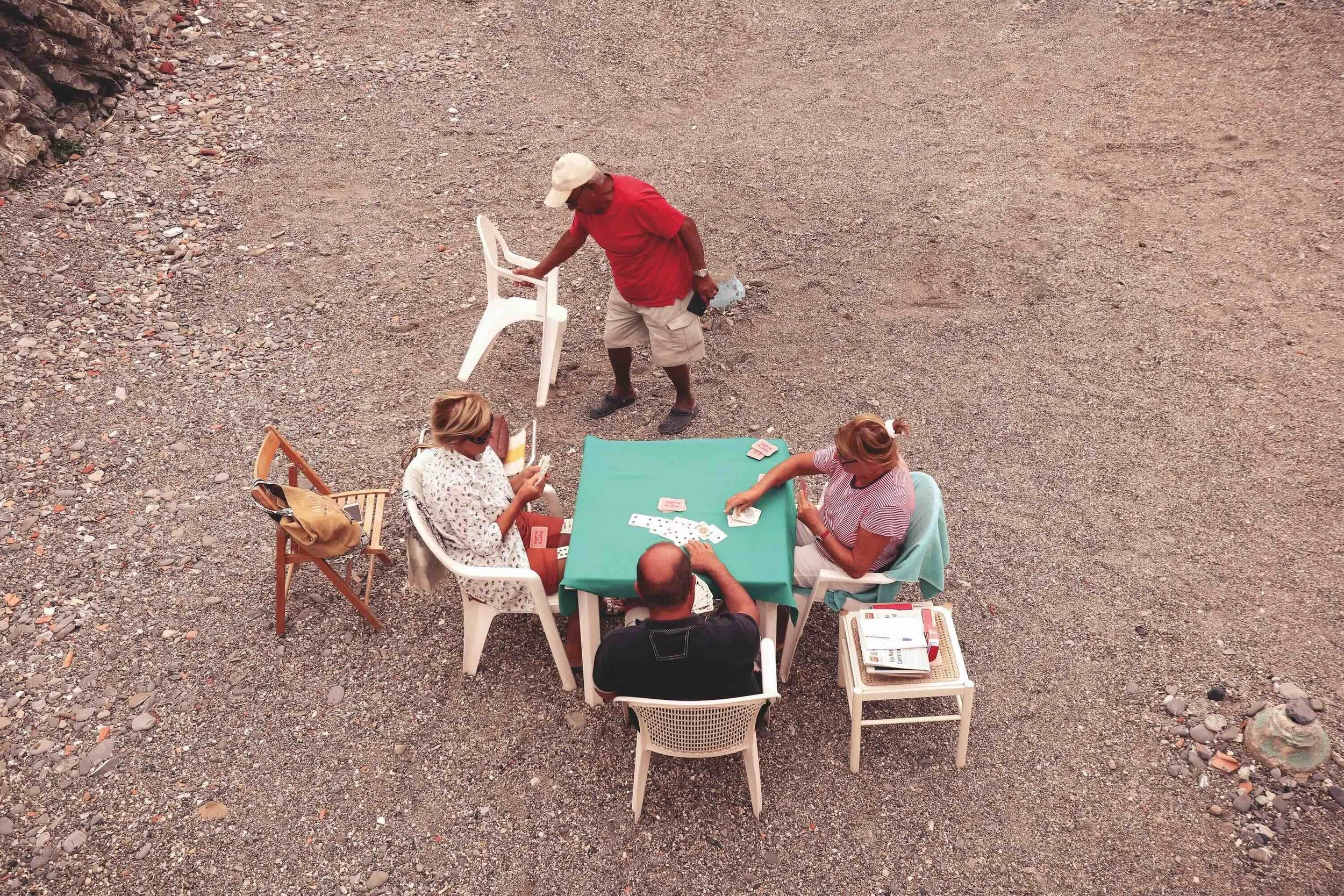
Whilst a bathhouse is a much smaller scale than a city, these concepts exist in a kind of microcosm. After all, a bathhouse is essentially made up of many areas to rest and be idle with others.
Whether lingering in a hot pool, a sauna, steam room or other thermal experience, the participants are often not doing anything other than sitting in a moment of pause beside other people.
It’s also a rare environment in which phones are removed from the equation. That makes communal bathing, at its core, an intrinsically present, social experience.
Similar to a city, there are also nodes or points of gathering throughout a bathhouse. Firstly there’s reception, where the journey begins and ends. People may also congregate at a drinking fountain or gather to take a break at a lounge. These nodes can be particularly potent opportunities for connection, especially if designed with generous space around them. This type of space is a balancing act of proportion and scale that creates both pockets of intimacy and also allows for spaciousness and freedom of movement.
Even if these opportunities for connection do not lead to verbal exchange, social connection occurs in simply participating in an experience alongside others. Like when we go to the cinema, a live concert or a group exercise class, we gain something from sharing the experience with others rather than doing it alone. The shared interest, synchronised participation and awareness of the people around us connects us to our community, strengthening our sense of belonging.
There are many parts of the world where the bathhouse is a well established third place – a place outside of work and home in which people congregate regularly and form ongoing relationships. In ancient Greece and Rome, the bathhouse was a place of social gathering. Today, it’s common to hear the chatter of regulars in the communal onsens of Japan and the Hammams in Turkey. Whilst bathing culture is relatively new in Australia, it is quickly gaining momentum and there is certainly potential for the bathhouse to be a third space of gathering that exists outside the home.
Whilst people and culture are ultimately responsible for building communities, design can definitely provide a framework for social connection.
Similar to a well planned city, a bathhouse can evoke connection with the people around us and harness a sense of belonging.
Through these choices, spaces have the power to create a meaningful and lasting impact on everyone who enters through the door.
Words by Ella Leoncio